


Will Planning Commission Impose Conditions?
Featured Stories, News May 17, 2012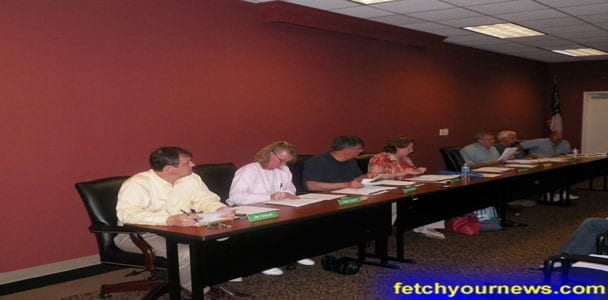
At a Pickens County Planning Commission meeting on Monday, May 14th, County Attorney Philip Landrum discussed how the Planning Commission could clarify what authority they have when approving or rezoning requests.
“When does the commission have the authority to impose conditions and if so what kind of conditions?”,
Landrum asked during the Planning Commission meeting on Monday to help the Commission clarify their decisions when imposing conditions on rezoning requests.
“As a practice, not only with this board, but with many other zoning boards, there is that custom to impose conditions to allow rezoning if the land owner agrees to do certain things or is required to do certain things.”
Landrum continued to explain that in his mind he thinks what is sometimes happening is that commissions are denying requests until they can make sure the land owner can meet certain requirements.
“This leads into two different areas,”
Landrum said.
“One is does the extent of the condition imposed by the Planning Commission reach the level of becoming a regulatory taking to where the property owner is entitled compensation under the due process clause of the Constitution, and the second issue is along the lines of enforcement.”
Landrum brought up the due process clause of the Constitution to question whether or not the decisions of the commission to impose conditions on rezoning requests is depriving the property owner of a property right which would entitle them compensation. His second issue concerning enforcement was who would enforce the conditions once they were made. Would it be the Commission’s responsibility?
Under the due process clause of the United States, as stated in the fifth amendment of the United States Constitution no person shall
“be deprived of life, liberty, or property, without due process of law; nor shall private property be taken for public use, without just compensation.”
“Does your condition advance a legitimate government purpose, and or does it deprive that property owner of a viable economic use of his land?”
Landrum stated would be one of the questions the Commission would have to ask itself.
Examples of this Landrum said would be a situation where a piece of property is going from agriculture or a low end intensity district to industrial and if the Commission chooses to deny the land owners request to protect the public’s safety as a result of traffic. In this type of situation the land owner would then be forced to provide certain requirements such as sidewalk repairs or deceleration routes which would improve traffic flow and public safety.
“It’s a double edged sword there,”
Landrum said.
“If you turn down the zoning request, are you then depriving them of a viable economic use of their property? Is your decision to not improve the zoning a regulatory taking?”
At the end of the meeting, the Commission decided that it would be best to look at each decision with a case by case evaluation therefore referring all cases to Planning and Development Director Joey Low.
Although County Commissioner Robert Jones did not attend the Planning Commission meeting on Monday, he did have this to say about the matter,
“They [The Planning Commission] do have the authority to suggest conditions to put upon certain entities depending on what all the facts are. However, it is still up to the governing authority of the county to make that decision whether it is a sole commissioner or a multi-person board.”
As to why the clarification was needed in the first place, the question is still unclear. Planning and Development Director Joey Low was unable to be reached.