


Thanksgiving Pet Safety brought to you by Mountain Emergency Animal Center
Lifestyle November 20, 2018
 Thanksgiving is a special holiday that brings together family and friends, but it also can carry some hazards for pets. Holiday food needs to be kept away from pets, and pet owners who travel need to either transport their pets safely or find safe accommodations for them at home. Follow these tips to keep your pets healthy and safe during the holiday.
Poison Risks
Overindulging in the family feast can be unhealthy for humans, but even worse for pets: Fatty foods are hard for animals to digest. Poultry bones can damage your pet’s digestive tract. And holiday sweets can contain ingredients that are poisonous to pets.
-
Keep the feast on the table—not under it. Eating turkey or turkey skin – sometimes even a small amount – can cause a life-threatening condition in pets known as pancreatitis. Fatty foods are hard for animals to digest, and many foods that are healthy for people are poisonous to pets – including onions, raisins and grapes. If you want to share a Thanksgiving treat with your pet, make or buy a treat that is made just for them.
-
No pie or other desserts for your pooch. Chocolate can be harmful for pets, even though many dogs find it tempting and will sniff it out and eat it. The artificial sweetener called xylitol – commonly used in gum and sugar-free baked goods – also can be deadly if consumed by dogs or cats.
-
Yeast dough can cause problems for pets, including painful gas and potentially dangerous bloating.
-
Put the trash away where your pets can’t find it. A turkey carcass sitting out on the carving table, or left in a trash container that is open or easily opened, could be deadly to your family pet. Dispose of turkey carcasses and bones – and anything used to wrap or tie the meat, such as strings, bags and packaging – in a covered, tightly secured trash bag placed in a closed trash container outdoors (or behind a closed, locked door).
-
Be careful with decorative plants. Don’t forget that some flowers and festive plants can be toxic to pets. These include amaryllis, Baby’s Breath, Sweet William, some ferns, hydrangeas and more. The ASPCA offers lists of plants that are toxic to both dogs and cats, but the safest route is simply to keep your pets away from all plants and table decorations.
-
Quick action can save lives. If you believe your pet has been poisoned or eaten something it shouldn’t have, call your veterinarian or local veterinary emergency clinic immediately. You may also want to call the ASPCA Poison Control Hotline: 888-426-4435. Signs of pet distress include: sudden changes in behavior, depression, pain, vomiting, or diarrhea. Contact your veterinarian immediately.
Precautions for Parties
If you’re hosting a party or overnight visitors, plan ahead to keep your pets safe and make the experience less stressful for everyone.
-
Visitors can upset your pets. Some pets are shy or excitable around new people or in crowds, and Thanksgiving often means many visitors at once and higher-than-usual noise and activity levels. If you know your dog or cat is nervous when people visit your home, put him/her in another room or a crate with a favorite toy. This will reduce the emotional stress on your pet and protect your guests from possible injury. If your pet is particularly upset by houseguests, talk to your veterinarian about possible solutions to this common problem.
Learn about dog bite prevention. -
-
If any of your guests have compromised immune systems (due to pregnancy, some diseases, or medications or treatments that suppress the immune system), make sure they’re aware of the pets (especially exotic pets) in your home so they can take extra precautions to protect themselves.
-
If you have exotic pets, remember that some people are uncomfortable around them and that these pets may be more easily stressed by the festivities. Keep exotic pets safely away from the hubbub of the holiday.
-
-
Watch the exits. Even if your pets are comfortable around guests, make sure you watch them closely, especially when people are entering or leaving your home. While you’re welcoming hungry guests and collecting coats, a four-legged family member may make a break for it out the door and become lost.
-
Identification tags and microchips reunite families. Make sure your pet has proper identification with your current contact information – particularly a microchip with up-to-date, registered information. That way, if they do sneak out, they’re more likely to be returned to you. If your pet isn’t already microchipped, talk to your veterinarian about the benefits of this simple procedure.
Learn more about microchips. -
Watch your pets around festive decorations. Special holiday displays or candles are attractive to pets as well as people. Never leave a pet alone in an area with a lit candle; it could result in a fire. And pine cones, needles and other decorations can cause intestinal blockages or even perforate an animal’s intestine if eaten.
WHAT FOODS ARE TOXIC TO DOGS AND CATS?
Thanksgiving is almost here and that means an abundance of delicious food. However, many popular human dishes aren’t healthy for pets to consume. It’s important to remember which foods are bad for dogs and cats. Especially, during holiday meals when dogs and cats beg for table scraps and guests might fall for those cute faces. Below are six Thanksgiving foods bad for cats and dogs. Make sure to keep these away from your pets to ensure they remain healthy this Thanksgiving. Also, don’t forget to inform your family and dinner guests about these potentially dangerous or toxic foods for pets so they do not feed them to your four-legged family members.
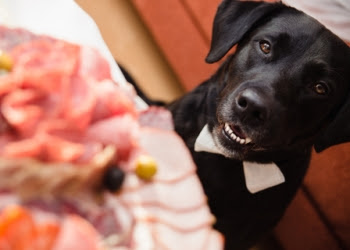
1. STUFFING
Thanksgiving dressing is often made with onions, scallions or garlic. These ingredients, however, are extremely toxic to dogs and cats and can cause a life-threatening anemia (destruction of the red blood cells). It’s best to avoid feeding any amount of stuffing to pets.
2. HAM
Ham and other pork products can cause pancreatitis, upset stomach, vomiting and diarrhea. Pork is also high in fat, which can lead to obesity in pets. Even a small amount of ham can contribute a very large amount of calories to a small dog or cat’s diet.
3. TURKEY BONES
Bones can cause severe indigestion in dogs and cats, potentially causing vomiting and obstructing the bowel. Bones may also splinter and cause damage to the inside of the stomach and intestines. In some cases, turkey bones may even puncture through the stomach and cause a potentially fatal abdominal infection.
Be Prepared with Pet Insurance. Get a Quote Today in 3 Minutes or Less.
4. MASHED POTATOES
While potatoes are safe for pets to eat, mashed potatoes usually contain butter and milk, which can cause diarrhea in lactose intolerant pets. Additionally, some recipes call for onion powder or garlic, which are very toxic to pets.
5. SALADS WITH GRAPES/RAISINS
There are many salads served at Thanksgiving that include grapes or raisins as an ingredient, from fruit salad, to waldorf salad, to ambrosia. However, grapes and raisins are very virulent and potentially deadly. Grapes can cause severe, irreversible and sometimes fatal kidney failure in dogs. Be sure to keep all dishes that include grapes and raisins away from pets.
6. CHOCOLATE DESSERTS
While pumpkin pie is the most famous Thanksgiving dessert (canned pumpkin also has many pet health benefits), many people offer a variety of chocolate desserts at Thanksgiving. Chocolate is toxic to dogs and cats, yet dogs love the smell and taste of it. The darker the chocolate, the more toxic it is. Keep all chocolate desserts out of the reach of pets to prevent an emergency trip to the veterinarian.
If your pets ingest any of these foods this Thanksgiving, be sure to call your veterinarian immediately.

The most important part of holiday pet safety is early action, which may prevent more costly and serious complications from developing. Have a happy and safe Thanksgiving!
Reward for Missing Pets in Gilmer county
Community August 16, 2018
Reward offered for the safe return of 2 beloved missing pets in Gilmer County. A local family is missing their German Shepherd mix and also a 14 year old Boston Terrier, both neutered.

The dogs darted through the woods beside the family’s home in the Roundtop area between Old Hwy 5 and Hwy 382 in Gilmer county. The German Shepherd had just been groomed and shaved and unfortunately was not wearing his collar. They have been missing 2 days and the family is very worried. These are very loved family pets and greatly missed. They do not want to be lost. Please call 770.878.252 or 706.276.7740 if you have any info on either of these missing pets. Thank you for your help.
Pet Safety Tips for the 4th of July
Community, Featured June 25, 2018These 4th of July, Pet safety tips brought to you by Mountain Emergency Animal Center!

Vicious Animal Alert in Pickens County
News June 28, 2019
June 28, 2019
According to the Pickens County Sheriff’s Office there is a search for 2 dogs. In the area of Old Philadelphia Road, deputies have been assisting animal control in attempting to locate 2 dogs that have attacked and killed 2 horses. During the attack, the owner of the horses tried to stop the attack and the dogs began to turn on them. The owner fired in the area of the dogs and they both fled.
One dog is described as a Red Pit Bull with a wide Red Collar on it. The second dog is described as a Pit / Boxer mix that was brown and gray in color.
If you observe dogs matching this description in the area of Old Philadelphia / Arminda / Glyness Street, please call 911.
Mountain Emergency Animal Center ~ Snake Bites & Pet Safety
Community May 11, 2018
It’s Warming Up!!! If you are enjoying the warmer weather now, so are the snakes! As a matter of fact, while driving home, a Garter Snake slithered in front of my car while at a stop sign. Some of my neighbors have told me that they’ve seen Copperheads about.
Venomous snakes injure over 150,000 dogs and cats every year in the US. This data is about 10 years old! So, you can only imagine as we continue to encroach upon their territory, there are going to be more exposures. In our area, the Copperhead is the most common venomous snake; however, there are also Eastern Diamondback Rattlesnake, Timber Rattlesnake, Cotton Mouth, Pigmy Rattlesnake and Coral Snakes in Georgia. In North Georgia, the Timber Rattlesnake and Copperhead are most commonly the cause of envenomation in pets and people. Rattlesnake venom is much more potent and deadly than that of the Copperhead. All of the snakes listed with the exception of the Coral Snake are Pit Vipers which belong to the family Crotalidae. Pit Vipers have triangular heads, elliptical pupils and “pits” or scent glands where there “nose” is (pic. #1). 
Pit Vipers in Georgia:
Eastern Diamondback Rattlesnake (pic. #2) 


Copperhead (pic. #3)
Timber Rattlesnake (pic. #4)
Cottonmouth/Water Moccasin (pic. #5)
Pit Viper venom contains over 50 enzymes which damage tissue. The snake uses the venom to immobilize their prey and pre-digest the tissue. Basically, these snakes cannot digest food that well in their gut, so venom breaks down the muscle, the connective tissue and the blood before they ingest it. So, the same thing happens when a dog or cat is bitten. The venom starts to digest the tissue and causes the blood to not clot.
Bites to pets most often occur on their face and front legs. Most owners will say they saw their dog digging after something and then hear a loud “yelp.” Soon after being bitten the area becomes swollen, bruised and very painful.
Signs your pet has been bitten by a venomous snake may include:
• Rapid swelling at the site of the bite
• Severe pain
• Bleeding from the fang punctures
• Drooling
• Discoloration of the skin to dark red or purple
• Bite marks—these may be difficult to see because the pet’s fur
• Rapid breathing
• Weakness
• Collapse (inability to get up)
• Pale gums
What to do if your pet is bitten:
• Limit your pet’s activity and keep your pet calm. This will help decrease the venom from circulating throughout the body. The more activity, the more blood flow and faster the heart beats increasing the amount of venom spread in the body.
• Contact your family veterinarian immediately or an emergency veterinary hospital such as MEAC.
What NOT to do if your pet is bitten:
• Do not place a tourniquet above the bite
• Do not cut over the wound
• Do not try to “suck” the venom out of the area
• Do not apply ice to the area
• Do not apply electrical shock to the area
• Do not give any medications
Typical testing and treatment performed
• Blood tests to check cell counts, blood clotting ability (coagulation times), organ function tests of the liver and kidneys
• X-rays of the chest if the pet is having trouble breathing or congestion in the lungs
• Pain medication
• Cleaning of wounds
• Intravenous fluids for shock and blood loss
• Antivenin administration—this is the best treatment and acts as an antidote to the venom
• Supplemental oxygen
• Plasma and sometimes blood transfusion
• Hospitalization and observation
Pickens Animal Shelter news
Community December 7, 2017A Home for the Holidays
On Saturday, Dec. 16, from 10 a.m. until 2 p.m., the Animal Shelter of Pickens County is waiving the adoption fee on dogs and cats. There are many wonderful adult dogs, cats and kittens just waiting for you to provide them with the warmth of your home and hearts. We have extra volunteers available that day to assist you with finding your “perfect match”. Take some time to get acquainted with one of the dogs off-leash in the separate play yard or take them for a walk around the property. Our friendly, loving cats and kittens welcome your tender touch so you can see how purrfectly they’re willing to join your family.
Our shelter pets are available for you to see online. We have them posted on Petango. Take a look at our website www. http://pickensanimalshelter.com/ and our Facebook page https://www.facebook.com/pickenscountyanimalshelter/. You’re going to fall in love!
We are also currently conducting a “WISH LIST” supply drive and have teamed up with Presents For Pets, a new 501(c)3 organization that specifically supports donation drives benefiting homeless pets. Look for these donation boxes located at Walmart, Kroger, Community Bank of Pickens County and Parish Lowrie State Farm. Our suggested items are listed on each box, and there are small tear-off shopping lists that you can take with you.
In a holiday hurry? Saturday, Dec 16, from 10 a.m. until 2 p.m., more volunteers will be set up to accept your supply donations at both locations of the Community Bank of Pickens County and Parish Lowrie State Farm. To make it more convenient during the hectic holiday shopping season, you’ll be able to “drive up – drop off” your purchased donations and our volunteers will be happy to help unload them from your car.
If you are available to volunteer for the supply drive or the adoption event on Dec. 16, please call Julie at 706-273-0355. We welcome your support. Pickens County Animal Shelter is located at 3563 Camp Rd. Jasper, Georgia 30143.
Would You Know How to Perform CPR on Your Pet? Watch the Training Video by Mountain Emergency Animal Center
Community, Featured February 26, 2018
Mountain Emergency Animal Center is a outstanding emergency vet clinic located in Blue Ridge, GA. They have a full surgical room, ICU kennels, a blood bank, and they keep anti venom on hand at all times. They are fully equipped to deal with any medical emergency your pet may have.
In this video they do a CPR training to show you exactly what you would need to do if your pet goes into cardiac arrest. This is great information for any pet owner.
Mountain Emergency Animal Center
Serving the Tri-State Area (GA, NC, TN)
Call us at 706-632-7879
Pet Emergency? Read no further and call us right away!
Pet emergencies, like human ones, can happen anytime. Your pet’s injuries and illnesses may require immediate attention.
11th Annual Paws in the Park presented by Humane Society of Blue Ridge October 21st 10am – 2pm Downtown Blue Ridge City Park
Community September 21, 2017

Animal Shelter Employee Fired
Community, News July 6, 2017
On Friday, June 16 Pickens Animal Shelter posted a picture on facebook of a male kitten to help find him a new home. The kitten was thought to be a stray due to the lack of a collar and being injured. The following day the kitten was able to find a new home.
Within the next few days a local couple posted on facebook that they were in search for their missing kitten. As it turned out, this was the same kitten adopted from the shelter. The couple proceeded to contact the shelter, but found out that the kitten had went to a new home.
They took to facebook to share how upset they were with their kitten being adopted and that the employee they spoke with made them feel like they were bad pet owners.
After many comments and reviews citizens were making on facebook, the shelter decided to release a statement on Tuesday, June 20.
UPDATE ON KITTEN THAT WAS ADOPTED ….
The shelter staff contacted the adopter and the kitten will be returned to the original owner tomorrow. The policy of the shelter in regards to stray kittens is to vaccinate/deworm and give them a flea pill during intake. They are then immediately put up for adoption if no medical/foster care is needed. During kitten season we do not have a stray hold on kittens due to the amount of litters coming in everyday. Unfortunately, we are a small shelter and cannot house that many cats/kittens without being forced to euthanize which was done in the past at this shelter. We post new arrivals as soon as they come in. In the past, the shelter didn’t have a Facebook page and many healthy and most sick and injured animals were euthanized unfortunately. To date we have only euthanized 2 dogs this year due to old age and we are very proud of our work. We appreciate the support of our local government and community. We will keep our heads and rescue/adoptions high. Good night and God bless.
Many citizens discovered after this statement was posted that Judy Moody, the employee who spoke with the couple was terminated due to the incident. Some of the commenters noted that since Judy began working at the shelter numbers have changed incredibly from 871 euthanizations and 112 adoptions in 2011 to 18 euthanizations and over 800 adoptions in 2015.
The biggest concern people have right now is if the animals will suffer from this. If these animals are not adopted in a certain amount of time, they risk being euthanized.
After officially being discharged from PCAS, Moody took to the internet to create a Facebook page Protect Pickens Pets. The page’s ‘About’ section reads:
The Pickens County Animal Shelter should not exist solely to keep Pickens Commissioner Rob Jones’ unemployable friends in a job or support his politics as usual. Pickens county Residents must PROTECT PICKENS PETS.
Following the page being created, Moody made a lengthy statement about her side you can read here.
FYN contacted Commissioner Jones for a statement,
I can assure the people of this county that I care about animals, I have some of my own. Before we had the shelter I worked with the water department to help the animals at the rescue to have water. I also helped when the shelter was first built to wire panels for the animals in the shelter. It’s a balancing act, I’m all for animals and want to do what is right for them. That’s what our goal is. Legally I can’t speak about the former employee, so I can’t really say much on that. As far as the protest, everyone has a legal right to do so.
Follow up with this story by reading, Animal Shelter Situation Escalates
Fetch Your News is a hyper local news outlet that covers Dawson, Lumpkin, White, Fannin, Gilmer, Pickens, Union, Towns and Murray counties as well as Cherokee County in N.C. If you would like to follow up-to-date local events in any of those counties, please visit us at www.fetchyournews.com
Graduation Ceremony of Rescued~Saving Detainees & Dogs One Life at a Time
Featured, News January 28, 2017
The Graduation Ceremony of Rescued was held on January 26th at the Colwell Detention Center. Rescued is a joint effort between Colwell Probation Detention Center, Mountain Shelter and Castoff Pet Rescue to rescue dogs who would otherwise be euthanized, while providing a positive impact on the offenders within the Colwell Detention Center.
Each Program participant made an impact statement and it was abundantly clear the positive effect the time spent working with these dogs and the wonderful people associated with the program had made on these men.
I have always thought dog was God spelled backwards because dogs are such a beautiful reflection of unconditional love. This program makes the lives better for so many more than the ones in the program, it reaches every aspect of the rest of these men’s lives, family, coworkers, friends and each person they may ever encounter. I would love to see this program all over the United States.
Enjoy the photos and the full graduation video below.
[cincopa AYHAc299gDRV]


Protect Your Pet During Winter and Cold Weather
Community, Featured, Featured Stories January 18, 2016
Brought to you in part by the Humane Society of the United States
Follow our tips to keep cats, dogs and horses safe and comfortable
-

Pets are happiest and healthiest when kept indoors, especially during extreme cold snaps.
In many areas, winter is a season of bitter cold and numbing wetness. Make sure your four-footed family members stay safe and warm by following these simple guidelines:
Keep pets indoors
The best prescription for winter’s woes is to keep your dog or cat inside with you and your family. The happiest dogs are taken out frequently for walks and exercise but kept inside the rest of the time.
Don’t leave pets outdoors when the temperature drops. During walks, short-haired dogs may feel more comfortable wearing a sweater. No matter what the temperature is, windchill can threaten a pet’s life. Pets are sensitive to severe cold and are at risk for frostbite and hypothermia during extreme cold snaps. Exposed skin on noses, ears and paw pads can quickly freeze and suffer permanent damage.
Share to keep animals warm and safe!


Take precautions if your pet spends a lot of time outside
A dog or cat is happiest and healthiest when kept indoors. If for some reason your dog is outdoors much of the day, he or she must be protected by a dry, draft-free shelter that is large enough to allow the dog to sit and lie down comfortably but small enough to hold in his/her body heat. The floor should be raised a few inches off the ground and covered with cedar shavings or straw. The doorway should be covered with waterproof burlap or heavy plastic.
Help neighborhood outdoor cats
If there are outdoor cats, either owned pets or community cats (ferals, who are scared of people, and strays, who are lost or abandoned pets) in your area, remember that they need protection from the elements as well as food and water. It’s easy to give them a hand.
Give your pets plenty of food and water
Pets who spend a lot of time outdoors need more food in the winter because keeping warm depletes energy. Routinely check your pet’s water dish to make certain the water is fresh and unfrozen. Use plastic food and water bowls; when the temperature is low, your pet’s tongue can stick and freeze to metal.
Be careful with cats, wildlife and cars
Warm engines in parked cars attract cats and small wildlife, who may crawl up under the hood. To avoid injuring any hidden animals, bang on your car’s hood to scare them away before starting your engine.
Protect paws from salt
The salt and other chemicals used to melt snow and ice can irritate the pads of your pet’s feet. Wipe all paws with a damp towel before your pet licks them and irritates his/her mouth.
Avoid antifreeze poisoning
Antifreeze is a deadly poison, but it has a sweet taste that may attract animals and children. Wipe up spills and keep antifreeze (and all household chemicals) out of reach. Coolants and antifreeze made with propylene glycol are less toxic to pets, wildlife and family. Read more about pets and antifreeze »
Speak out if you see a pet left in the cold
If you encounter a pet left in the cold, politely let the owner know you’re concerned. If they don’t respond well, document what you see: the date, time, exact location and type of animal, plus as many details as possible. Video and photographic documentation (even a cell phone photo) will help bolster your case. Then contact your local animal control agency or county sheriff’s office and present your evidence. Take detailed notes regarding whom you speak with and when. Respectfully follow up in a few days if the situation has not been remedied.Learn more »
Horse owners: provide special care to your outdoor pets
Give your horses shelter and dry warmth
Be sure your horses have access to a barn or a three-sided run-in so they can escape the wind and cold.
While not all horses will need to be blanketed, blankets will help horses keep warm and dry, especially if there is any rain or snow. If you’ve body-clipped your horses, keep them blanketed throughout the winter.
Supply food and water to your horses around the clock
Give your horses access to unfrozen water at all times. You can use heated buckets or water heaters/deicers to make sure the water doesn’t freeze.
Feed your horses more forage—unlimited amounts, if possible—during extreme cold. This will help your horses create heat and regulate their body temperatures.
Share to keep animals warm and safe!
No Scaredy Cats This Halloween: Top 10 Safety Tips for Pet Parents
Featured, News October 30, 2015
Pet Safety Tips Brought to you by:

Attention, animal lovers, it’s almost the spookiest night of the year! The ASPCA recommends taking some common sense precautions this Halloween to keep you and your pet saying “trick or treat!” all the way to November 1.
1. No tricks, no treats: That bowl of candy is for trick-or-treaters, not for Scruffy and Fluffy. Chocolate in all forms—especially dark or baking chocolate—can be very dangerous for dogs and cats. Candies containing the artificial sweetener xylitol can also cause problems. If you do suspect your pet has ingested something toxic, please call your veterinarian or the ASPCA Animal Poison Control Center at (888) 426-4435.
2. Popular Halloween plants such as pumpkins and decorative corn are considered to be relatively nontoxic, but they can produce stomach upset in pets who nibble on them.
3. Wires and cords from electric lights and other decorations should be kept out of reach of your pets. If chewed, your pet might suffer cuts or burns, or receive a possibly life-threatening electrical shock.
4. A carved pumpkin certainly is festive, but do exercise caution if you choose to add a candle. Pets can easily knock a lit pumpkin over and cause a fire. Curious kittens especially run the risk of getting burned or singed by candle flames.
5. Dress-up can be a big mess-up for some pets. Please don’t put your dog or cat in a costume UNLESS you know he or she loves it (yup, a few pets are real hams!). For pets who prefer their “birthday suits,” however, wearing a costume may cause undue stress.
6. If you do dress up your pet, make sure the costume isn’t annoying or unsafe. It should not constrict the animal’s movement or hearing, or impede his ability to breathe, bark or meow. Also, be sure to try on costumes before the big night. If your pet seems distressed, allergic or shows abnormal behavior, consider letting him go au naturale or donning a festive bandana.
7. Take a closer look at your pet’s costume and make sure it does not have small, dangling or easily chewed-off pieces that he could choke on. Also, ill-fitting outfits can get twisted on external objects or your pet, leading to injury.
8. All but the most social dogs and cats should be kept in a separate room away from the front door during peak trick-or-treating hours. Too many strangers can be scary and stressful for pets.
9. When opening the door for trick-or-treaters, take care that your cat or dog doesn’t dart outside.
10. IDs, please! Always make sure your dog or cat has proper identification. If for any reason your pet escapes and becomes lost, a collar and tags and/or a microchip can be a lifesaver, increaing the chances that he or she will be returned to you

Furry Football Stars – Puppy Bowl 2014 Includes Georgia Rescue
Community, Featured Stories, Team FYN Sports January 29, 2014
Every dog has its day! This certainly rings true for Parker, the beautiful adopted little ball of fur that was one of Tri State Pet Rescue’s very own rescues!!! Parker’s in the Puppy Bowl Lineup and here’s how that happened.
(more…)
Does Fido need a Tic-Tac?
Community May 12, 2012
Do the sprays for a dog’s bad breath work and which kind is best?
As a general rule, these sprays, when used alone, do not provide a long term solution. Halitosis, or bad breath, in dogs is generally the result of a build-up of dental tartar on the teeth. (more…)